
I wanted to share a recent project that perfectly demonstrates why I’m such a big advocate for mini split systems. This one’s personal – it’s actually an addition I built on my own property. Like many homeowners, we were facing the classic problem of needing more space without wanting to move. Our house is on the smaller side, and with a growing family, we needed to get creative with our solution.
The project started with a simple idea: build a multipurpose space that could serve as a guest house for visiting family and friends, while also doubling as a home office and workout area. Being in the HVAC business and having spent years in energy efficiency, I knew this was a perfect opportunity to put my expertise to work.
When it came to choosing the HVAC system, it was a no-brainer for me. I went with a Mitsubishi mini split, and I’ll tell you exactly why. First off, my company, Truficient Energy Solutions, is a Diamond Elite contractor with Mitsubishi, so I get great pricing. But more importantly, I’ve installed countless Mitsubishi systems over the years, and their quality is simply unmatched. For a 400-square-foot space like this, it just didn’t make sense to install a traditional full-size system. I specifically chose the MSZ-GL15NA indoor unit paired with the MUZ-GL15NA outdoor unit. This system boasts a 22 SEER rating, which puts it at the higher end of energy efficiency available today. For those not familiar with SEER ratings, that’s like getting a gold star for energy efficiency in the HVAC world.
The performance has been incredible. Even when temperatures drop below 15°F outside, the system maintains a cozy 65-66°F inside without breaking a sweat. During our brutal Texas summers, when it’s pushing 100°F outside, the space stays perfectly comfortable at 72°F. What’s really impressed me is the energy usage – I already had an energy monitor installed on my panel and was able to verify the system barely pulls a few hundred watts when running. Even with an electric water heater for the bathroom and mini kitchen, the impact on our electric bill has been minimal.
Now, here’s something I always emphasize to contractors and homeowners: the building envelope is just as important as the HVAC system. I made sure this addition was built right from the ground up. We used blown-in cellulose in the walls, ZIP sheathing that was properly sealed with tape, and then added an inch of foam board before putting on the siding. This gave us an effective R19 rating in the walls. For the roof, since the space is mostly shaded by trees, I kept it simpler with blown-in cellulose and a metal roof. It’s actually worked out perfectly – in summer, the trees provide shade, and in winter, when they lose their leaves, we get some helpful solar gain.
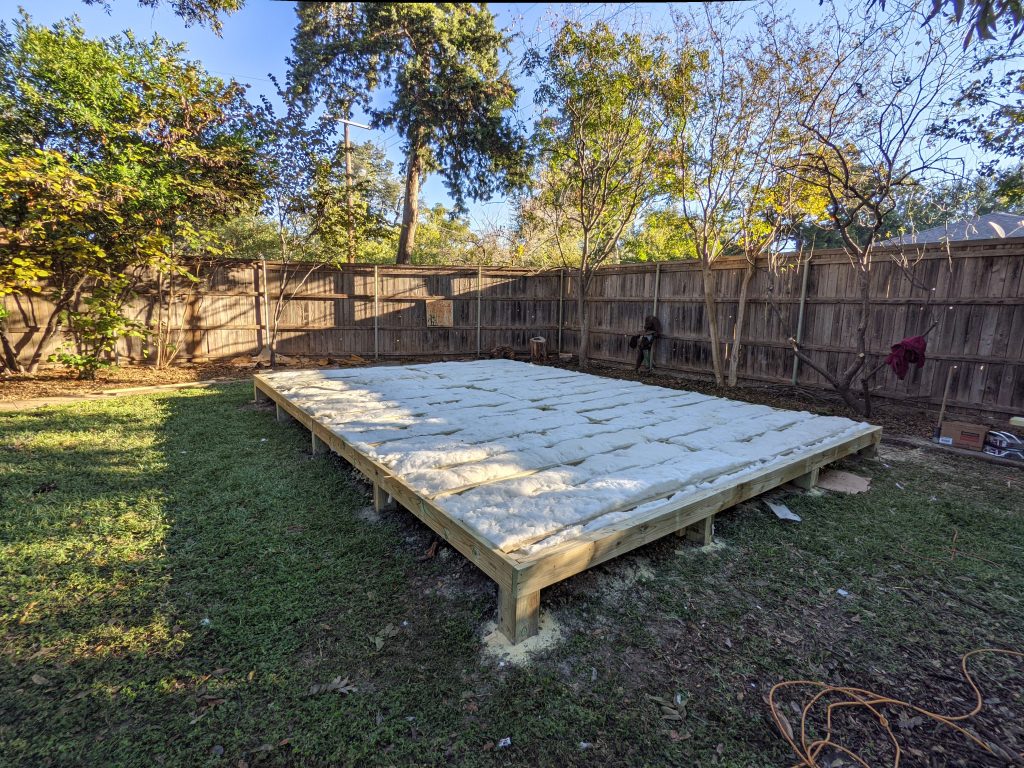
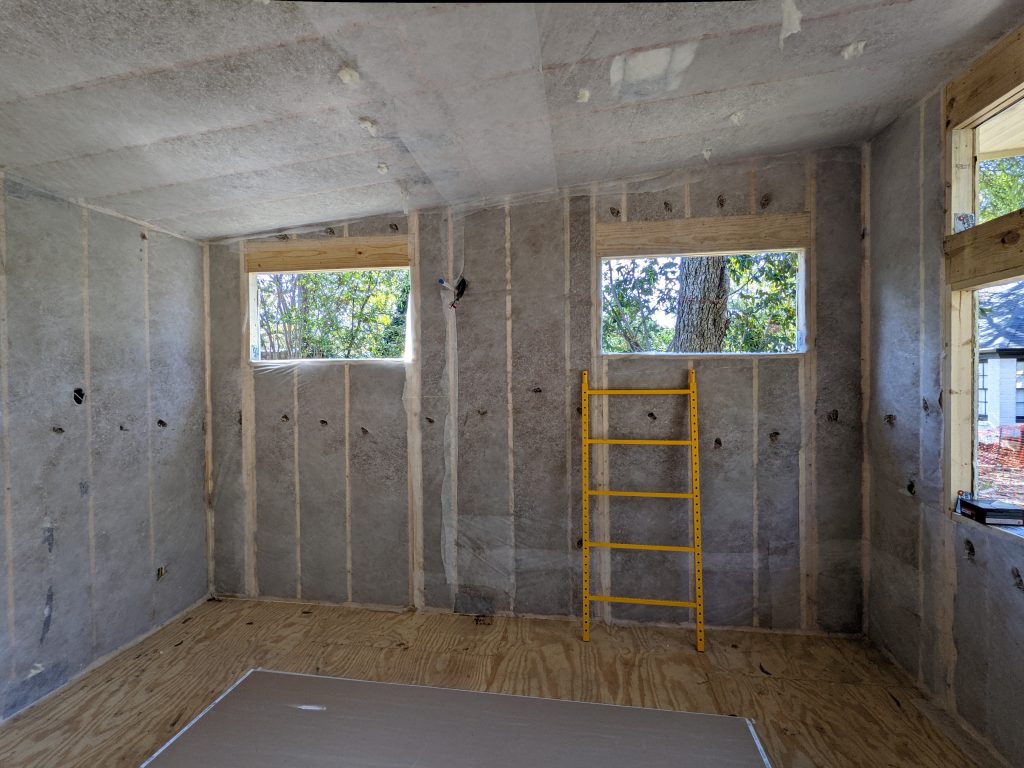
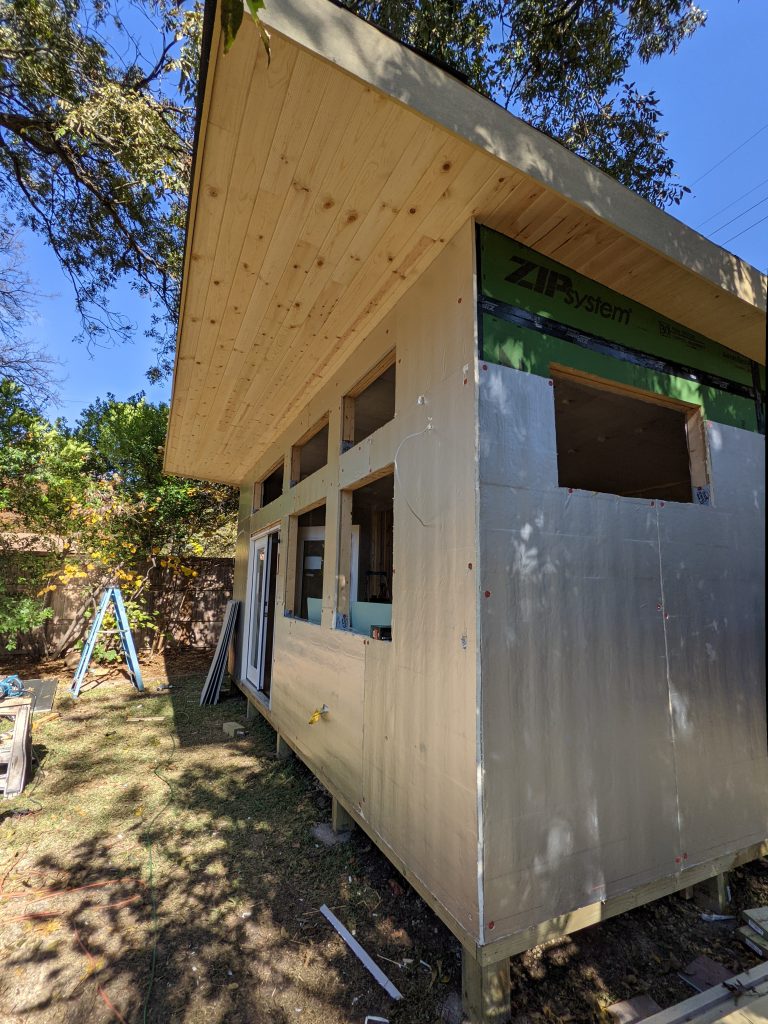
Because we built it right, I was able to go with a 1.25-ton unit, which is smaller than what you’d typically need for a space this size if it wasn’t well-insulated. I probably could have gotten away with a one-ton unit, but given that we see temperatures down to zero degrees sometimes, I wanted that extra capacity for peace of mind.
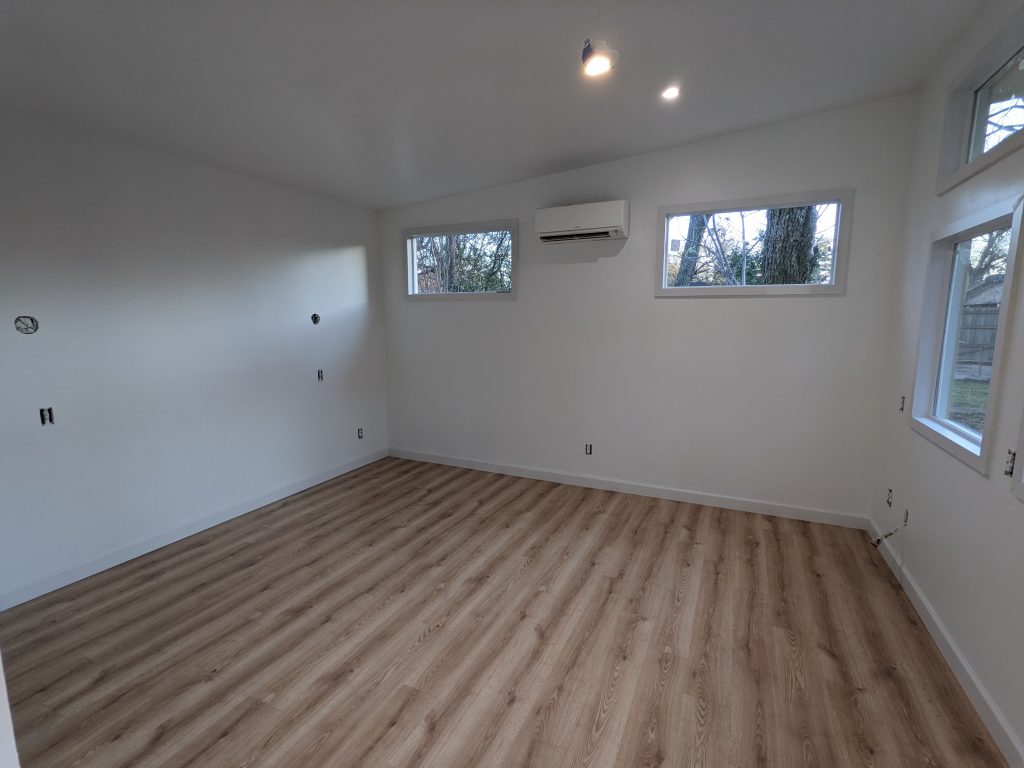
Mitsubishi wall mount heats and cools even the space and there is a full bathroom attached.
Living in Texas, we had to think about power reliability too. Our grid isn’t exactly known for its stability – we lose power at least once a year, sometimes for extended periods. So I designed the system to be separate from the main house, making it easy to run off a generator when needed. We’re also planning to add battery backup in the future. The mini split’s efficient operation means we can run it comfortably on backup power without burning through too much fuel.
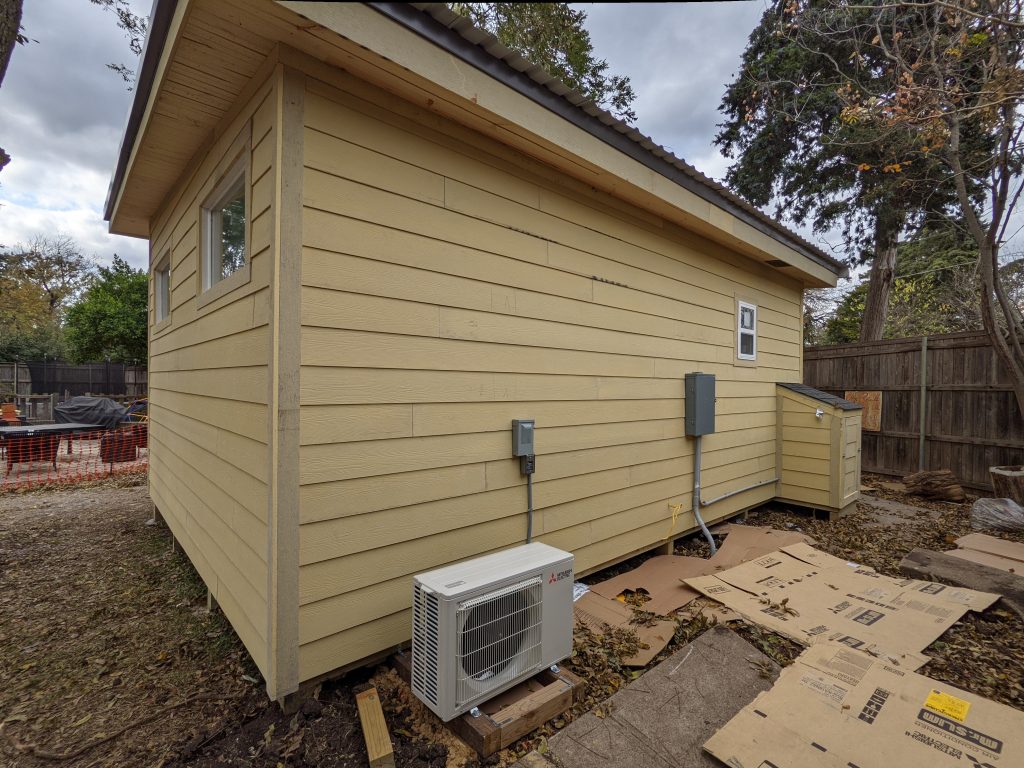
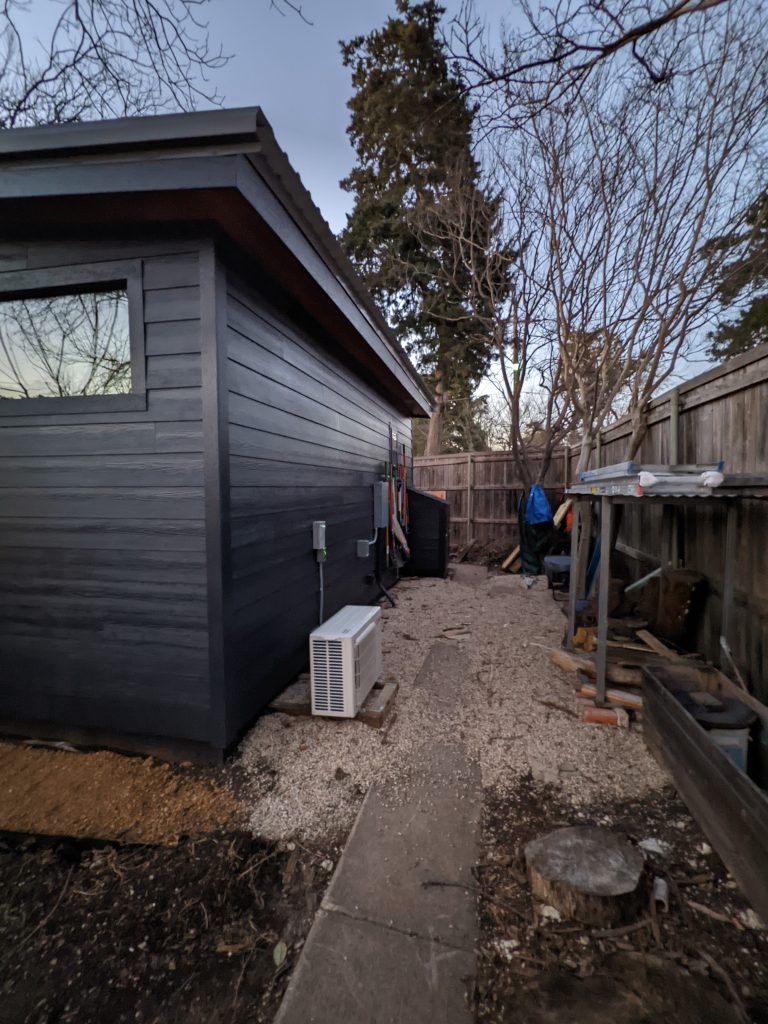
Here’s what really drives it home for me: after completing this project, I’m even more convinced that mini splits are the way to go for these types of additions. Whether it’s a garage conversion, a backyard apartment, or any kind of add-on space, they’re often more cost-effective than extending existing HVAC systems. But here’s the key – you’ve got to design it right from the beginning. That means thinking about insulation, air sealing, and proper sizing from day one.
I’ve seen plenty of additions over my years in this business, and I can tell you that taking the time to plan and build it right makes all the difference. This project has become my go-to example when clients ask about mini splits for their own additions. It’s not just about installing an HVAC system – it’s about creating an efficient, comfortable space that’s built to last.
If you’re thinking about a similar project, I’d be happy to share more specific details about our approach. There’s nothing better than learning from real-world experience, and this project has definitely provided plenty of valuable lessons.

